As a core transmission component of heavy-duty equipment, the performance of industrial gearboxes largely depends on the scientific and rational nature of their assembly methods.Assembly methods refer to the organic integration of various functional units according to predetermined principles and technological routes during the design and manufacturing process, resulting in a structurally complete, performance-coordinated, and reliable mechanical assembly. This method reflects a deep understanding of transmission principles and integrates the systematic application of material selection, processing technology, and assembly techniques.
Industrial gearboxes are typically assembled around a housing as the basic carrier. The housing not only provides an installation reference for gears, shafts, and bearings but also, through a reasonable rib layout and wall thickness design, provides sufficient rigidity and strength to suppress deformation and vibration under high-speed, heavy-load conditions. Cast iron or high-strength steel plate welded structures are commonly used; the former offers good vibration damping and moderate cost, while the latter can be topologically optimized according to stress distribution to achieve both lightweight and high rigidity.
Gear pairs and shaft systems are the core units for power transmission. When assembling the gears, the gear type (e.g., cylindrical gears, bevel gears, planetary gears, etc.) and arrangement (parallel shafts, intersecting shafts, or compound transmission) must be determined based on the speed ratio, torque, and spatial constraints. Gear machining requires processes such as hobbing, shaping, shaving, or grinding to ensure that the tooth profile accuracy and surface quality meet the design standards. The shaft system, which mates with the gears, undergoes heat treatments such as tempering and surface hardening to improve wear resistance and fatigue resistance. During assembly, coaxiality and fit accuracy must be ensured to avoid additional bending moments and eccentric loads.
Bearings and support structures play a dual role in the assembly process, serving both positioning and load-bearing functions. Rolling bearings are often used in high-speed, light-load applications to improve speed performance, while sliding bearings or high-load-bearing roller bearings are preferred in heavy-load, impact environments, supplemented by lubrication and cooling designs to control temperature rise. The arrangement of support positions and spans requires mechanical analysis to ensure that shaft deflection is within allowable limits and to maintain gear meshing stability.
The lubrication and sealing system is a crucial component ensuring long-term reliable operation. Lubrication methods are categorized into splash lubrication, pressure circulation lubrication, and grease lubrication. The appropriate method must be selected based on rotational speed, load, and environmental conditions, and requires the integration of components such as oil lines, oil sump, oil pump, and filters to form an effective oil film and remove abrasive particles. The sealing system consists of skeleton oil seals, labyrinth seals, and mechanical seals, which must prevent lubricating oil leakage and block the intrusion of external dust, moisture, and corrosive media.
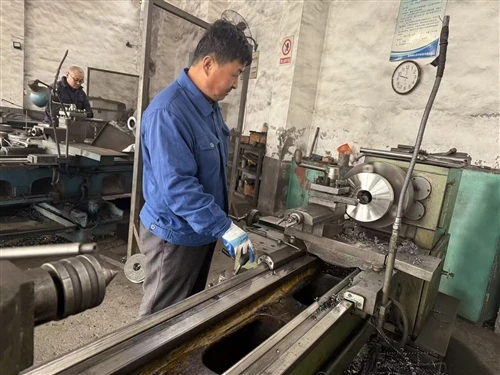
During the assembly stage, the assembly method emphasizes orderly processes and controlled procedures. Components must be cleaned, rust-proofed, and inspected before being sequentially installed into the housing according to positioning standards. Gear backlash, bearing clearance, and shaft alignment are adjusted step-by-step. A preliminary no-load test run is completed, and temperature rise and vibration are measured. Only after confirming the absence of abnormalities can final inspection and shipment proceed.
In summary, the construction method of industrial gearboxes takes the gearbox housing as the base and coordinates the selection, processing and integration of units such as gear pairs, shaft systems, bearings, lubrication and sealing. Through structural optimization, precision control and system matching, a mechanical assembly capable of efficient and stable power transmission under harsh working conditions is constructed, providing solid transmission support for industrial equipment.