The production of a high-qualityspeed reducer does not begin the moment assembly is completed; rather, it stems from every instance of precision machining throughout the manufacturing process.
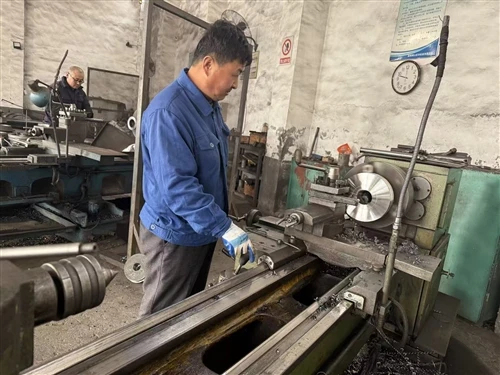
The image shows a key stage in gearbox manufacturing: precision turning of core components. In the production workshop, skilled technicians are operating a horizontal lathe to machine metal blanks with high accuracy, gradually transforming raw materials into precision-engineered components that meet strict design requirements.
As one of the fundamental processes in gearbox manufacturing, turning plays an essential role in achieving dimensional accuracy, ensuring proper assembly, and improving the overall performance and reliability of the finished gearbox.
Insufficient machining precision of components may lead to:
Uneven bearing loads, resulting in increased wear;
Gear meshing deviations, causing operational noise;
Increased equipment vibration, reducing service life;
Compromised sealing performance, increasing the risk of oil leakage.
Following the turning process, the parts undergo a series of subsequent operations, including:
Heat treatment for strengthening → Precision grinding → Gear machining → Quality inspection → Assembly and testing
The result is a high-performance speed reducer characterized by high load-bearing capacity and a long service life.
The employee pictured is fully focused on the machining process, combining equipment capabilities with manual expertise honed over years of practical experience. From part positioning and parameter adjustment to dimensional inspection, every step reflects a rigorous approach to manufacturing.
It is these technicians on the front lines of production who integrate meticulous attention to detail into every machining operation, ensuring that every part meets required standards and delivering reliable, high-efficiency speed reducers to customers.